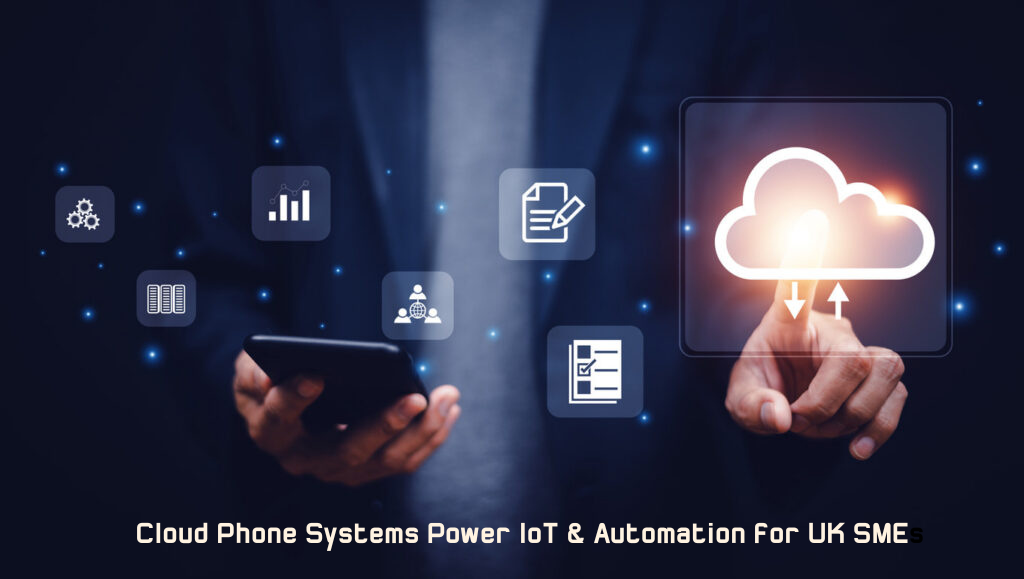
Modern UK small and medium-sized enterprises are not just replacing desk phones — many are redesigning their workflows so devices, sensors, and communications work together automatically. A cloud based phone system can be the central nervous system that routes voice, data, and automated alerts between people and machines, from customer chatbots to remote sensors that trigger support calls.
This article explains how cloud telephony integrates with IoT and automation, outlines the necessary network capabilities (FTTP, 5G, or resilient mobile options), presents practical use cases, discusses security, and provides an adoption checklist tailored for UK businesses. It’s useful, vendor-neutral guidance for teams that want measurable efficiency gains without unnecessary hype.
Table of Contents
- What Is a Cloud Based Phone System
- Why Cloud Telephony and IoT Are a Natural Fit
- Network and Technical Requirements That Every Business Must Check
- Migration Checklist For a Low-Risk Cutover
- Cost, Risk and Security Factors to Address
What Is a Cloud Based Phone System?
A cloud based phone system (sometimes called hosted telephony or cloud PBX) runs call control and features on remote servers rather than on-site hardware. Users access calling, voicemail, conferencing, and integrations via apps, desktop clients, and SIP devices (VOIP phones). When paired with APIs and webhooks, these systems can trigger and respond to events — for example, a door sensor raising an alarm can automatically open a call to security staff, or a CRM-trigger can launch a callback to a customer when an IoT sensor reports an issue.
Since the platform is hosted online, organisations can streamline operational sequences (e.g., automated menu navigation, callbacks based on triggers, and text message notifications) without requiring sophisticated local telecom setups. Having cloud based phone system for small businesses provides access to advanced automation features while significantly lowering ongoing operational costs.
Why Cloud Telephony and IoT Are a Natural Fit?
Three fundamental aspects position cloud phone systems perfectly for interconnected devices and automated processes:
- Programmable Access Points
Cloud telephony services provide available connection spots (e.g., callback mechanisms, web service instructions, and pre-built links). These allow device networks and automated programs to start calls, dispatch messages, or control notifications without manual intervention.
- Reactive Framework
Events originating from connected devices (e.g., warnings, inventory marks, or equipment failures) instantly prompt a response from the cloud telephony. They establish an automated route for human intervention when necessary.
- Elasticity and Central Control
Managed services can expand or contract fluidly based on the number of devices or call traffic. This is mainly because they permit unified oversight for companies operating across multiple locations.
These features empower organisations to shift away from manual problem resolution towards automated, trigger-based actions. They enable them to accelerate reaction times and lessen routine administrative burdens.
Network and Technical Requirements That Every Business Must Check
To run voice+IoT automation reliably, you should verify:
- Broadband Nature and Delay: For automated processes across several locations requiring immediate response, FTTP (full-fibre) offers the most steady operation.
- Mobile/5G options: For mobile sites or redundancy, 5G broadband business internet service or mobile broadband services are a viable alternative, as they’re especially useful for low-latency telemetry or temporary locations. Coverage and SLAs can be a crucial criterion. So, always check if 5G meets all your needs.
- Resilience: Choose a dual-access setup. For example, consider fibre optic internet and 4G/5G failover for vital, operation-sensitive services.
- Security & QoS: Verify that your provider offers SRTP or TLS support for signalling and media. Also, check whether it provides direction regarding QoS or traffic prioritisation rules for the access networks.
Cost, Risk and Security Factors to Address
- Pricing, ROI, and Typical Hurdles
Costs vary by scale. Cloud telephony replaces capex on PBX hardware with predictable subscription fees. When automation reduces manual triage and mean time to response, ROI often materialises in months for incident-heavy operations (support, facilities, retail). Common objections (call quality and reliability) are addressable by proper network design (FTTP/QoS /mobile failover) and a staged migration.
- Security and Governance
When you join voice to automated event flows, security is essential. Enforce encrypted signalling (TLS) and media (SRTP), apply least-privilege access to APIs, log automation triggers and outbound calls, and ensure data residency/processing policies meet regulatory requirements. For regulated sectors (finance, healthcare), archive and auditing features are often required; it’s best to confirm these in procurement.
Conclusion
Cloud based phone systems are not just a modern phone — they’re a platform for automation. When paired with resilient network choices (FTTP, 5G or dual-access failover), they let UK SMEs convert sensor data and service events into immediate, accountable actions that save time and reduce risk.
We Voice can help map out a migration checklist and pilot plan that fits your sites and traffic profile. We recommend the minimum network and device changes to get your automation live safely.