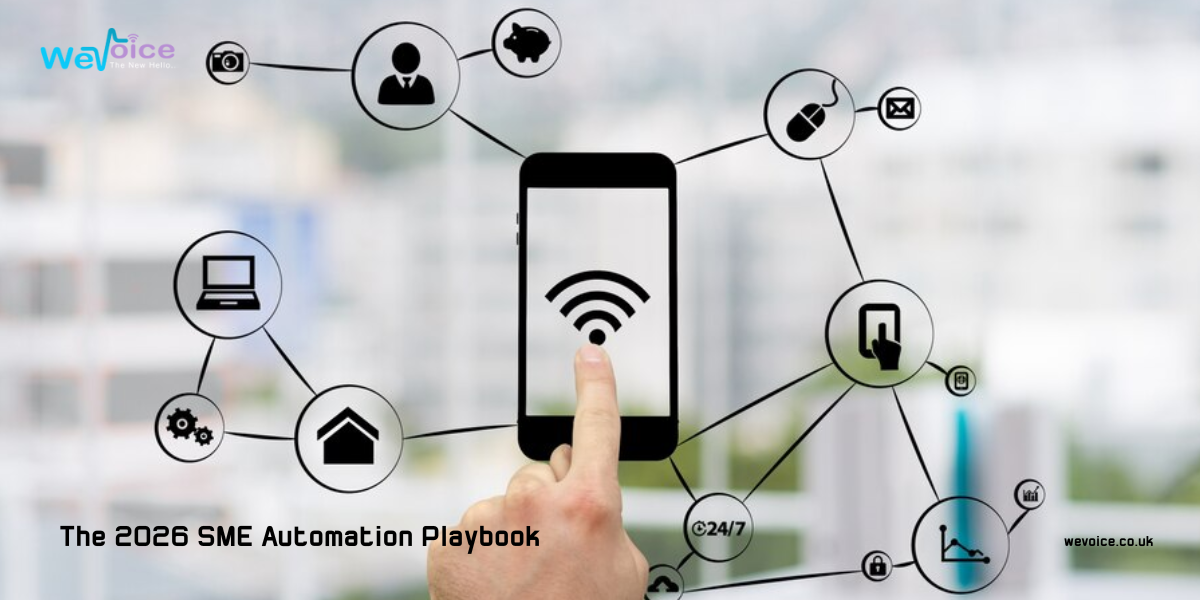
UK SMEs are entering a new phase of automation—one where connected devices, sensors, and mobile-led workflows are the backbone of day-to-day operations. But automating at scale is no longer just about choosing the right IoT hardware; it’s about making the investment affordable and ensuring every device stays reliably connected.
In 2026, device financing models and unlimited IoT SIM plans have emerged as the two most powerful enablers of SME automation. When working together, they allow businesses to deploy more devices, automate faster, and optimise operational costs without large upfront spend.
This playbook explores the trends driving adoption, the role of financing, why unlimited IoT plans matter, and how UK SMEs can get automation-ready this year.
Table of Contents
- Why Automation Matters in 2026
- Device Financing: The Modern Backbone of SME Automation
- Why Unlimited IoT SIM Plans Are Critical for Connected Operations
- How Device Financing and Unlimited IoT Plans Work Together
- The 8-Point Automation Readiness Checklist for SMEs
- Future Trend: Automation-as-a-Service for SMEs
Why Automation Matters in 2026?
Automation is no longer an enterprise-only capability. SMEs across retail, logistics, healthcare, field service, hospitality, and manufacturing are increasingly turning to IoT devices to improve accuracy, reduce human error, and accelerate workflows.
Recent industry analysis shows:
- The number of connected IoT devices is expected to reach ~39 billion by 2030, reflecting rapid global adoption.
- The UK IoT devices market is projected to grow at a 15.3% CAGR from 2025 to 2030, driven by increased deployment of sensors, smart devices, and automation tools.
With automation now tied directly to competitiveness, SMEs are seeking scalable, cost-efficient ways to deploy connected devices—without disrupting cash flow. This is where device financing and unlimited data SIM plans intersect.
Device Financing: The Modern Backbone of SME Automation
Purchasing devices outright is increasingly impractical, especially when SMEs need:
- smartphones for field teams
- tablets for order management
- handheld terminals for logistics
- sensors for automation and monitoring
- routers and mobile broadband units
Automation requires dozens—or hundreds—of connected endpoints. Financing makes this scalable.
Here’s how device financing accelerates automation:
- Reduced upfront CapEx: SMEs can deploy more devices quickly without a large initial investment.
- Predictable monthly costs: Monthly payments are easier to manage and pair well with mobile or IoT SIM subscriptions.
- Faster upgrade cycles: As new IoT or automation hardware emerges, businesses can upgrade without sunk costs.
- Bundling with connectivity: Financing can be paired with SIMs, broadband, or mobile data plans for an integrated solution.
- Automation in cash-restricted sectors: Retail, hospitality, logistics, and small healthcare providers often have tight cash flow—financing solves this.
In short, financing democratises automation, making scaling possible even for small teams.
Why Unlimited IoT SIM Plans Are Critical for Connected Operations?
IoT devices rely heavily on mobile data—not just for communication, but for:
- Real-time analytics
- Location tracking
- System alerts
- Automation triggers
- Continuous telemetry
Take a look at the following points to understand what makes IoT data needs different:
- Frequent microdata bursts
- Constant uptime requirements
- Multi-device deployments
- Sensitivity to throttling or overage charges
This is why UK SMEs increasingly prefer unlimited IoT data plans. They come with the following benefits:
- No risk of overage charges: Businesses avoid unexpected costs from devices sending continuous data.
- Better performance under load: No throttling ensures consistent automation workflows.
- Easier scaling: Add new devices without revisiting data budgets.
- Multi-network reliability: Some IoT SIMs use multiple UK networks for greater stability.
- Secure M2M communication: IoT SIMs support private APNs, VPNs, and encrypted channels.
Unlimited IoT data becomes indispensable when your devices are constantly on the move or transmitting real-time information. It plays a critical role in powering:
- GPS trackers that update locations every few seconds
- Field sensors that monitor temperature, moisture, or movement around the clock
- Telematics units that send continuous performance and diagnostics data
- Smart POS terminals that must stay connected during peak trading hours
- NFC and contactless payment systems that process fast, secure transactions
- Automation alerts that are necessary for equipment, security, and environmental monitoring
- Mobile broadband routers that connect remote or temporary sites with no fixed line access
These data-intensive devices often operate beyond the four walls of an office, making unlimited mobile connectivity a practical safeguard against interruptions, throttling, or unexpected overage charges.
How Device Financing and Unlimited IoT Plans Work Together?
Automation requires two things:
- Hardware
- Connectivity
Financing solves the cost barrier of hardware, while unlimited IoT SIMs ensure the devices stay connected without restrictions.
Here’s why this combination works in 2026:
- SMEs can adopt more automation tools without a large upfront investment.
- Predictable monthly billing helps businesses manage long-term digital transformation.
- Connected devices can operate 24/7 without worrying about exceeding data limits.
- The cost model aligns perfectly with how SMEs prefer to scale—incrementally, but continuously.
When combined, these two services help SMEs accelerate automation timelines by 6–12 months, compared to waiting for capital budgets to free up.
The 8-Point Automation Readiness Checklist for SMEs
Before deploying automation systems, SMEs should evaluate:
- Total number of devices required for automation
- Monthly data usage per device
- Device cost vs. financing affordability
- Network resilience—single or multi-network IoT SIMs
- Security requirements (VPN, private APN, encryption)
- Automated monitoring tools needed
- Lifecycle management and upgrade cycles
- Integration with current workflows
This checklist ensures automation investments deliver long-term value.
Future Trend: Automation-as-a-Service for SMEs
By 2026, the UK will see the rise of an emerging model: Automation-as-a-Service, where device financing, connectivity, and device management platforms are bundled together. This approach gives SMEs:
- subscription-based access to sensors and automation tools
- predictable cost models
- faster deployment
- managed connectivity
- regular upgrades
As businesses shift towards pay-as-you-grow operations, this trend will accelerate further.
Conclusion: Automation is Becoming a Subscription—Not a Capital Expense
Automation is now a necessity for UK SMEs adapting to competition, rising labour costs, and digital-first customer expectations. Device financing eliminates the financial barrier, while unlimited IoT SIM plans provide the stable connectivity required for real-time automation. Together, they offer a scalable, low-risk pathway for SMEs ready to modernise in 2026.If your business is exploring automation, connected devices, or IoT solutions, We Voice can help you build the right combination of mobile device financing, unlimited data plans, and connectivity options to accelerate your digital journey.