IoT sensors, smart devices and automated workflows are transitioning from pilots to everyday business use. For firms that depend on near-real-time actions — such as retail tills, alarm monitoring, predictive maintenance, or instant customer escalations — the delay between an event and the response (latency) is critical. Combining edge computing with cloud based phone systems and robust phone and broadband deals enables businesses to deliver timely, reliable automation without over-engineered on-site hardware. This article explains the practical benefits, outlines key considerations for your connectivity and telephony stack, and provides guidance on designing a low-risk migration for UK SMEs.
Table of Contents
- What Is Edge Computing, and How Does It Cut Latency
- Why Pair Edge Computing with Cloud Based Phone Systems
- Realistic Use Cases for Low-latency Cloud Voice + Edge
- Connectivity Checklist: What the Best Broadband Phone Package Must Deliver
- Security, Compliance, and Governance: Essential Considerations
What Is Edge Computing, and How Does It Cut Latency?
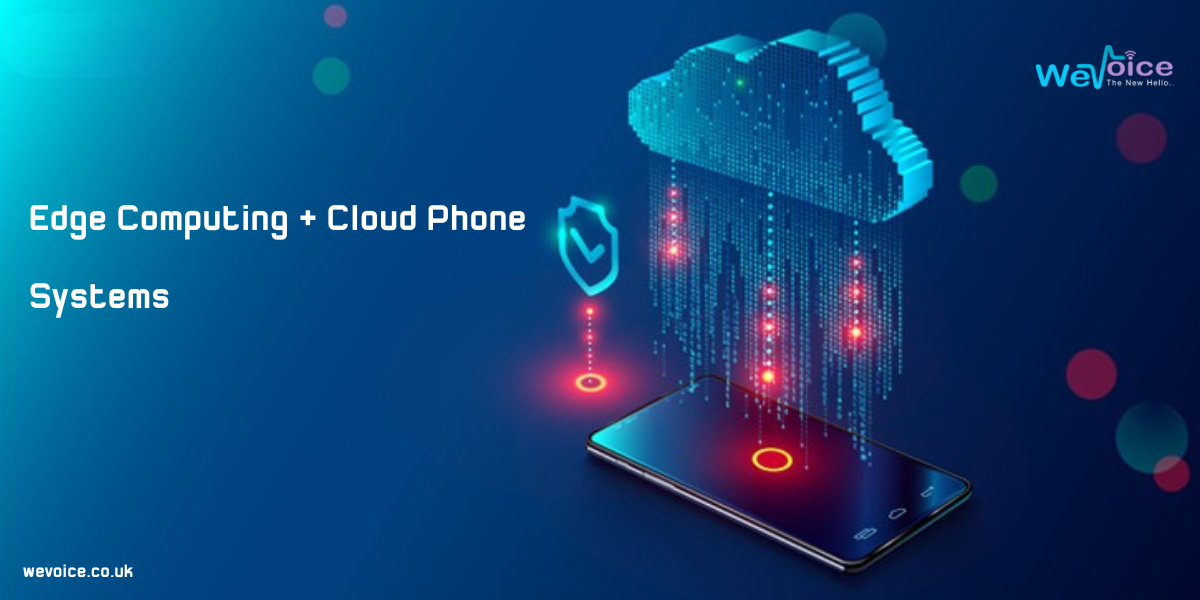
Edge computing processes data close to where it’s generated — on local gateways, mini-servers or specialised devices — rather than sending everything to a distant cloud. Local processing shortens the round-trip time for critical decisions (for example, an alarm, a safety interlock, or an automatic callback). For latency-sensitive IoT use cases, a hybrid model — combining edge computing for immediate decisions with cloud computing for aggregation, analytics and long-term storage — is the practical choice. Both academic and industry research consistently demonstrate that edge methodologies reduce latency and data transmission needs while boosting robustness.
Why Pair Edge Computing with Cloud Based Phone Systems?
A cloud phone system (hosted PBX/cloud telephony) manages calls, messaging and integrations from remote servers while providing APIs for automation. When an edge node detects an event, it can trigger the cloud PBX to place a priority call, send an SMS, or open a ticket — all in a much smaller time window than if data travelled back and forth to a central cloud for processing. The result is faster escalation, reduced false alarms, and more reliable automated workflows for teams that require immediate action. The integration relies on well-designed APIs and resilient access networks.
Realistic Use Cases for Low-latency Cloud Voice + Edge
- Retail & Loss Prevention: An “after-hours motion sensor” triggers an edge camera to verify activity; if confirmed, the edge node requests an immediate escalation via cloud voice to the on-call security team.
- Facilities & Manufacturing: Vibration or temperature overshoot is assessed locally. For critical thresholds, the edge initiates an automated call to duty engineers with diagnostic context.
- Healthcare & Telecare Monitoring: Local device logic detects a fall or anomaly and escalates to a responder using cloud telephony, improving response times while preserving privacy.
Connectivity Checklist: What the Best Broadband Phone Package Must Deliver
The network is the foundation. When selecting phone line and broadband deals that will support edge + cloud voice, prioritise the following:
- Low-latency Access (FTTP preferred)
Full-fibre (FTTP) delivers steady, low latency and significant bandwidth for mixed voice, visual, and telemetry traffic. In the UK, FTTP access has expanded rapidly, with numerous premises now having access to it. We Voice verifies FTTP availability at each site and provides the most suitable fibre or mobile broadband alternative where full fibre isn’t yet available. Coverage, however, varies by location, so it is always advisable to confirm your local availability.
- 5G/mobile Options for Mobility & Redundancy
We Voice’s 5G broadband business internet services, for example, can provide low latency where fixed fibre is unavailable or as a rapid fallback for temporary sites. We validate 5G availability and configure mobile broadband as a managed failover option when fixed access is limited.
- Dual-access/Failover
We Voice designs dual-path connectivity using fibre and mobile failover, and tests switchover to ensure continuity during outages. We also implement fibre-primary + 4G/5G (or secondary fibre) failover for business-critical continuity.
- SIP/VoIP Compatibility
Ensure that your telephone and broadband deals support SIP trunking and typical VoIP communication devices (VoIP handsets) or software phones. The majority of commercial environments also benefit from verifying their user devices for up-to-date firmware, matching codecs, and secure setup procedures to prevent connection failures or sound clarity issues.
- QoS & Traffic Prioritisation
Stay updated on QoS settings and support traffic policing to ensure that voice and telemetry maintain priority during periods of peak usage. This generally means assigning voice data to the appropriate priority queues, establishing DSCP markers, and ensuring that router rules prevent bandwidth-intensive programs from interfering with calls or sensor data transmissions.
Security, Compliance, and Governance: Essential Considerations
Automated event handling in real-time workflows introduces additional security and governance requirements. For UK SMEs, best practices include:
- Encryption & Data Protection
- Enforce TLS for signalling and SRTP for media streams to secure voice data.
- Apply GDPR-compliant handling for any speech-to-text transcripts or telemetry. This includes encrypted storage, retention policies, and consent management.
- Transparency & Auditability
- Design UIs showing the cause for any automated operation (e.g., highlight the rule, trigger phrase, or sensor input).
- Keep records of both automatic events and manual interventions for clear tracking and responsibility.
- Human Escalation & Oversight
- Ensure agents always have a distinct escalation route and the ability to supersede automated judgments.
- Put accountability in regulated industries such as healthcare or finance, where adherence to the law is crucial.
Conclusion
Edge computing, combined with cloud based phone systems, is a pragmatic way for UK SMEs to achieve real-time automation without the expense of on-site PBX hardware. The typical building blocks — FTTP or resilient business broadband, SIP-capable cloud telephony, edge nodes for local decision making, and well-designed APIs — are all available today. The biggest wins come from targeting small, measurable automation projects and designing for resilience and compliance from day one.
We Voice can create a pilot plan that maps connectivity possibilities (FTTP broadband, 5G backup), handset alternatives (VOIP phones), and integration points with your CRM if you need a migration checklist customised to your sites and call profile.